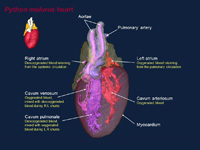
Functional morphology of the cardiovascular system in ectotherm sauropsidsThe morphology of the heart of reptilian sauropsids allows to re-direct blood flow into the pulmonary or systemic circulations, i.e., central shunting. We study the functional morphology of the heart of reptilian sauropsids to understand the mechanisms of shunting and the physiological conditions when shunting occurs. We wish to answer the following questions: (1) what is the mechanism (functional anatomy) of shunting? (2) What are the conditions when shunting occurs, and (3) how much blood is shunted between circulations? In this project we are testing explicit functional hypotheses in a comparative framework to solve these questions and to understand why different heart morphologies evolved to serve the function of central shunting.
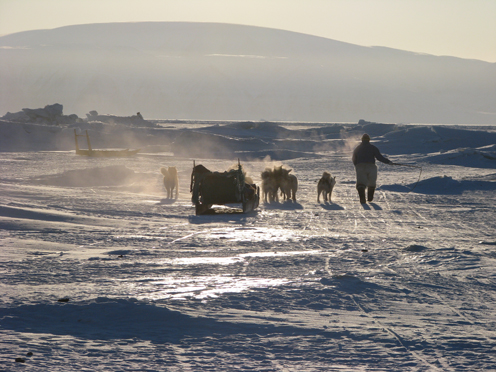
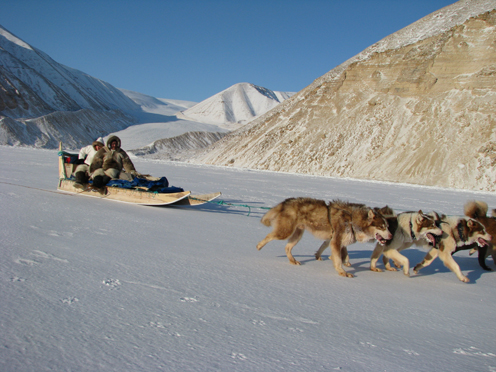
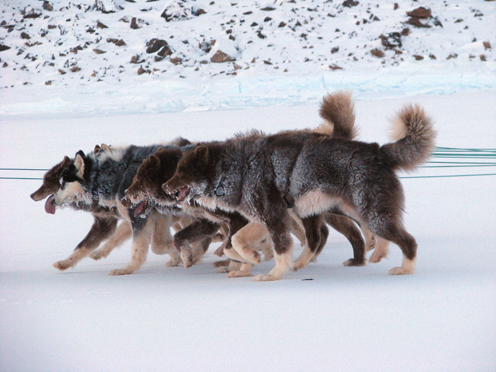
Phenotypic flexibility and exercise physiology in domestic dogsWe are interested in how mammals adjust to seasonally fluctuating conditions of living. We study different breeds of (aboriginal) domesticated dogs as the comparative framework of a large scale evolutionary experiment. Over the past years we have studied seasonal adaptations (effects of exercise, temperature and food quality) of energy metabolism and muscle structure of Inuit sled dogs in Greenland. Our current research is focused on testing effects of training in a laboratory setup, i.e., running dogs on a treadmill. Once we have established a detailed reference system for morphological and physiological responses to work load we plan to go back to the field to study adaptations of different aboriginal dog breeds. – In a side project, we use geometric morphometrics to analyze shape changes of domestic dog skulls in the context of a known phylogeny of domestic dogs.
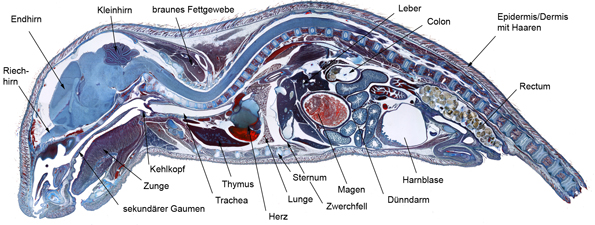
Evolution of the phylotypic stage in zebra fishThe evolution of the overall similarity of early vertebrate embryos, historically described as the biogenetic law, is still vividly debated. Currently, three main hypotheses aim at explaining the overall similarity of early vertebrate embryos. (1) Random: The phylotypic period is neither selected nor constrained; it emerges randomly from selection for specialized later embryonic stages. (2) Epigenetic: the phylotypic period results from constraints during early embryogenesis, i.e., multiple inductive interactions among cells, tissues and developing organs prevent selection on the phylotypic period because any change of one element might have deleterious consequences on the many interconnected / integrated structures / functions. (3) Stabilizing selection causes a stable phenotype of early vertebrate embryos. The reasons why stabilizing selection acts on the phylotypic period are multiple among vertebrates and may reach from maintaining common gene expression pattern to morphological integration. – We are testing these evolutionary hypotheses by using a quantitative genetic breeding approach, morphometrics and growth analysis.
Functional exchange capacity of snake lungsIn a collaboration project with the Clinic for Birds of Reptiles of the Department of Veterinary Medicine of the University of Leipzig, we investigate the functional pulmonary exchange capacity of snakes. We use quantitative measures of lung volume, tissue exchange capacity and diffusion barrier to estimate the capacity of snakes for exchange of oxygen and carbon dioxide. Special attention is given to the changes of the thickness of the diffusion barrier following infection and the associated restrictions of the pulmonary exchange capacity. The data acquired in this project are of immediate relevance estimating the condition of snakes.